A little while after I finished the post on making yogurt, I stumbled across another little gem, but it took awhile for me to get to the store to be able to try it out.
So some people were posting somewhere that probiotic capsules could be used as a yogurt starter. If that were really the case, that would be huge. The freeze-dried yogurt starters run about a dollar to two each. That's kind of a chunk of change, but not so bad in the long term if you make yogurt regularly and always save some to start the next batch. But it you don't? If you forgot, or if you can't go through a batch quickly enough? If one of the kids ate it? Yeah, it can get a little pricey.
I figured it would be worth giving this idea a try, especially since it could wind up saving a lot of money.
As luck would have it, when I finally made it out to go grocery shopping (we've been down to one vehicle for the past couple of months, so getting out for shopping has been a little difficult), I happened upon a discounted bottle of probiotic capsules, normally $12.49, discounted to $6.29. Nice. The label states that each capsule contains 14 billion bacteria from eight species: Lactobacillus acidophilus, Bifidobacterium lactis, Lactobacillus plantarum, Lactobacillus salivarius, Bifidobacterium bifidum, Bifidobacterium longum, Lactobacillus rhamnosus, and Lactobacillus casei. The bottle contains sixty capsules and I used one capsule to make a two-quart batch of yogurt, making my cost for this starter a little over ten cents.
What I had read suggested using capsules containing two to three billion bacteria, so fourteen billion would have been a little over the top. But it was on sale....
Anyway, so instead of having to find my starter yogurt in the fridge and then mixing it with a little of the milk to start a new batch of yogurt, I just had to wait for the milk to reach the right temperature and then sprinkle the probiotic capsule contents (don't just throw the capsule into the yogurt) over the milk and whisk it in.
I really wasn't sure this was going to work. After all, I've tried quite a few things that have not worked.
Fortunately, this is not one of them!
I actually made two different batches of yogurt that day so that I could do a side-by-side comparison. I followed the same directions for making both batches, but for the first batch I used some starter that I had set aside from the previous batch, and for the second batch I used the probiotic capsule.
Not only did the probiotic capsule make yogurt, it made it very well! The yogurt set up much firmer but was still creamy and thick without being stiff. And it's much cheaper and easier. Awesome!
In the future, I will probably try using half a capsule per batch, or I may buy probiotic capsules that contain even more bacteria, and then use only a portion of those. Next time you make yogurt, be sure to give probiotic capsules a try.
Links to related posts:
Dry Milk
Making Thick, Creamy Yogurt
Frozen Yogurt from Food Storage
© 2019, PrepSchoolDaily.blogspot.com
Showing posts with label yogurt. Show all posts
Showing posts with label yogurt. Show all posts
Wednesday, June 24, 2026

Saturday, April 18, 2026
Frozen Yogurt from Food Storage
I'm not entirely convinced that I'll be able to generate enough electricity to make ice, in the summer, that is. I'm not too concerned about being able to make ice in winter.
But I think there is a chance that people will eventually make it happen, and be able to make it happen in quantities sufficient to make frozen yogurt once in a while. Of course, I would rather make ice cream. I love ice cream. Ice cream loves me. But I'm not too sure how much whipping cream we'll have access to in the long term.
Now, I have to admit, I was very skeptical about making frozen yogurt. I've made quite a bit of ice cream in the past, and even with an ice cream maker and following lots of suggestions for how to make ice cream creamier, the suggestions never really worked for me. Our ice cream was usually pretty grainy.
I feared the situation would be worse with frozen yogurt; after all, frozen yogurt has a lot more water in it, and less fat, and yogurt made from powdered milk has no fat. I thought the result would be very grainy.
But I was wrong! Amazing!
Frozen yogurt making experts shared that one of the keys to making smoother frozen yogurt at home is to use liquid sugar for the sweetener, and also that because this is a frozen treat, more sugar needs to be used. Also, using this liquid sugar would make scooping the frozen yogurt much easier, which is really important if you don't have an ice cream maker and are just using your freezer.
It was true! I made surprisingly creamy frozen yogurt today. Two batches!!
I followed the recipe for making yogurt that I posted here last month, using the probiotic capsule to make the yogurt, because it made a much firmer yogurt.
To two cups of this yogurt, I added 1/3 cup of corn syrup, but I think a little more sweetener would be good. Beyond that, the ingredients you add will depend on the flavor you want to make. Pureed fruits are a really good choice. Right now I'm thinking chocolate would be good, too.
Links to related posts:
Basic Food Storage--Powdered Milk
Making Thick, Creamy Yogurt
For further reading:
https://www.seriouseats.com/2014/06/how-to-make-what-is-best-frozen-yogurt.html
https://thesurvivalmom.com/try-today-homemade-yogurt-powdered-milk/
https://www.biggerbolderbaking.com/homemade-frozen-yogurt/
© 2019, PrepSchoolDaily.blogspot.com
Saturday, August 2, 2025
Alfredo Sauce Entirely from Food Storage
A few months ago when I started into researching about other ways to use Magic Mix, I came across a recipe for Alfredo sauce. I absolutely love a really good Alfredo sauce.
Here's my recipe for a perfect Alfredo sauce. You'll notice it's not very conducive to a societal collapse situation, unless you happen to have a dairy cow at your disposal.
Perfect Alfredo Sauce
- 1/2 cup butter
- 2 tablespoons cream cheese
- 1 pint heavy cream
- 1-2 teaspoons garlic powder
- 2/3 cup freshly grated Parmesan or Romano cheese
- dash nutmeg
- salt and pepper to taste
Every other Alfredo sauce recipe gets compared to this one.
Here's the Magic Mix version of Alfredo sauce:
- 2/3 cup Magic Mix
- 1 cup water
- 1 cup Parmesan cheese
- dash of salt, pepper, and nutmeg
For me, this was kind of a fail. The taste was acceptable, but the texture wasn't so great. No one's running to the sink to vomit, but no one wants to finish it, either. It's just too starchy, and not really smooth and creamy like our grid-up and happy days sauce above.
So here's the next attempt at a long-term food storage Alfredo sauce. It's pretty good, especially for being low-fat.
Long Term Food Storage Alfredo Sauce Using Yogurt
- 2 tablespoons butter (or coconut oil)
- 1 1/2 teaspoons garlic powder
- 1 1/4 cups homemade yogurt (using this recipe)
- 1/2-2/3 cup Parmesan cheese
- dash nutmeg
- salt and pepper to taste
Melt butter in a medium saucepan over low heat. Stir in garlic powder and yogurt, and then add in cheese and seasonings. Serve over noodles.
Note: It is very important to keep the heat low. If the heat is too high (or your noodles are too hot when serving), the sauce will curdle.
This sauce comes together super quickly. Much more importantly, it actually tastes pretty good. I could serve this to friends and family without any embarrassment at all. It's not at all starchy like the Magic Mix sauce above. Yeah, you know you're missing out on the fat of a perfect Alfredo sauce, but knowing that it's lower in fat makes up for it (a little bit). What is super amazing to me is that this is all from what I consider long-term food storage ingredients. The yogurt is all food storage, Parmesan cheese can be stored at room temperature for at least a year, and coconut oil keeps for at least five years.
Give it a try, and adjust it to your tastes for your own perfect Alfredo sauce.
Links to related posts:
Making Thick, Creamy Yogurt
Magic Mix
Saturday, June 28, 2025
Beyond Milk
I'm pretty happy with substituting dry milk for fresh in most things. Being able to replace butter with coconut oil helps a lot, too, in many recipes. But there are some recipes that don't take well to substitutions, and some situations that require something closer to the real thing. Or maybe you've just got money to blow and/or a more refined palate.
Shelf-Stable/Irradiated Milk. I have to admit, I'm not a huge fan of irradiating my food. I'm still a bit suspicious of whether consuming irradiated food is actually a good idea. So I don't store this form of milk. These products don't have a great shelf-life, usually six months to a year at best. But they're an option for those who can't have real milk. For my oldest son who has a severely restricted diet, it's nice to be able to purchase shelf-stable almond milk.
Evaporated Milk. The cost is a bit high for my tastes, and I rarely use it. Because I rarely use it, it's hard to find in the cabinets even if I do have it. It's just easier to make a substitute using dry milk. On the flip side, however, evaporated milk is available in low-fat and whole options, so if you really need the fat content you have this option. However, pay attention to the use-by dates. It's been my experience that while the milk may still be safe, taste deteriorates substantially.
Sweetened Condensed Milk. Everything said about evaporated milk applies to sweetened condensed milk, except perhaps for the taste deterioration past the use-by date. Sweetened condensed milk will caramelize and turn brown, which may or may not be an issue for you.
Media Crema. This is found in small cans in the Mexican food section of the grocery store. It is a sort of whipping cream substitute, though it does not whip up. It's pretty thick stuff, almost the consistency of yogurt or sour cream. We've used it to make ice cream and other desserts.
Shelf-Stable Whipping Cream. So how opposed am I to irradiated foods? Apparently, I'm not as purist as others. Sometimes you just have to have real whipping cream. It still has a shelf-life of only six months to a year at best. I get mine at Trader Joe's, and I find it surprisingly reasonably priced, usually pretty comparable to the cost for fresh cream.
Sour Cream. The dehydrated sour cream that I tried definitely does not reconstitute well for fresh use. The off-taste is just too overpowering, and this is pretty much what online reviews state as well. A good friend with a freeze dryer and reports that freeze-dried sour cream is perfect.
Cream Cheese. My personal experience with dehydrated cream cheese powder matches with online reviews. Like dehydrated sour cream, it's not so good for fresh use, except that it makes great cream cheese frosting. And it does work well in cooking and baking.
Yogurt. Dehydrated yogurt is ... not very good. I did it a few years ago. I'm not doing it again. Freeze-dried yogurt is another matter. My same friend with the freeze-dryer has done a lot of it with flavored yogurts. It is very good. Amazon carries freeze-dried yogurt starter. It's a little pricey, but you've got to have a starter to make yogurt. It works well and has a stated shelf-life of about five years, but I've been making great yogurt with starter I purchased ten years ago.
Links to related posts:
Pantry Substitutes Using Dry Milk
Sunday, January 12, 2025
Dietary Deficiencies and Consequences--Vitamin B2 (Riboflavin)
When society collapses and people begin starving or even just failed to store good food and vitamins, we'll start seeing conditions that occur with vitamin deficiencies. We've already reviewed pellagra and beriberi, conditions that occur when the body does not receive adequate niacin (vitamin B3) or thiamine (vitamin B1). Riboflavin (vitamin B2) deficiency doesn't have a common name; probably because it wasn't common (shocker). However, riboflavin deficiencies are found in more than half the population of third world countries and refugee camps. Deficiency is uncommon in the United States due to government regulations requiring the fortification of milled grains and cereals with essential vitamins. Currently, even with the relatively unhealthy and overly processed diet Americans consume, over 97% of us meet the minimum requirements.
But what happens when the government is no longer in place to make sure processed foods are enriched with riboflavin? What happens with riboflavin deficiency?
Even mild to moderate riboflavin deficiency may cause anemia. Severe deficiency, ariboflavinosis (yeah, that was creative), is marked by inflammation of the mouth and lips, sore throat, painful tongue, chapped and cracked lips. There may also be oily skin rashes on the scrotum or vulva, the little cleft above the lips (anatomically known as the philtrum, learn something new every day), and/or the nasolabial folds ("laugh lines" between the nose and the mouth). The eyes may become itchy, watery, bloodshot, and light-sensitive. In pregnancy, riboflavin deficiency may cause congenital heart defects and limb deformities in the fetus.
Riboflavin is water-soluble, which means the body does not store it; it has to be consumed every day. Riboflavin is found in milk, cheese, yogurt, and eggs; legumes; lean meat, liver, and kidneys; leafy green vegetables, beet greens, broccoli, and Brussels sprouts; winter squash, sweet potatoes, mushrooms and almonds.
When basic nutritional needs fail to be met, riboflavin deficiency may become something we see in those around us, but it's likely that they'll have other consequences of nutritional deficiency appear first, especially those related to the B vitamins. However, life is going to get interesting. We don't know exactly how things are going to unwind, and we especially don't have experience with what happens when a society goes from having a well-fortified healthy diet to scavenging for food. The vast majority of us have never even seen pictures of people with vitamin deficiencies. We should probably prepare.
Links to related posts:
Dietary Deficiency and Consequences--Vitamin A
Vitamin B1
Vitamin B3
Vitamin B5, B6, B7
Vitamin B9
Vitamin B12
Vitamin C
Vitamin D
Calcium
Iodine
Iron
Magnesium
Potassium
Zinc
© 2019, PrepSchoolDaily.blogspot.com
© 2019, PrepSchoolDaily.blogspot.com
Friday, August 16, 2019
Five TEOTWAWKI Options for Cream Cheese
After you've been at the prepping and food storage game for a little while, you eventually start thinking and preparing as if you are really going to have to eat what you have stored. And that your family is going to have to eat it, too. And that having good food is going to be critical to being able to be happy. You're going to have to be able to cook and bake from scratch, and you're going to get a hankering for the good food you used to have. Like cream cheese. And you're probably thinking you need to buy some powdered cream cheese or you need to learn how to make it.
So let's look at the options so that you can make an informed choice for your family. All of these options were tested for fresh eating only, not for being baked into desserts or casseroles.
For me, right here and right now, I'm giving up. I think I will not pursue the quixotic quest for cream cheese any further. At least, for now. Maybe we should just get some goats.
Bigger, Bolder Baking's Homemade Cream Cheese
Links to related posts:
Making Thick and Creamy Yogurt
For further reading:
https://www.biggerbolderbaking.com/how-to-make-cream-cheese/
http://preparetodaywardnewsletter.blogspot.com/2014/09/my-food-storge-week-in-review-yogurt.html
© 2019, PrepSchoolDaily.blogspot.com
So let's look at the options so that you can make an informed choice for your family. All of these options were tested for fresh eating only, not for being baked into desserts or casseroles.
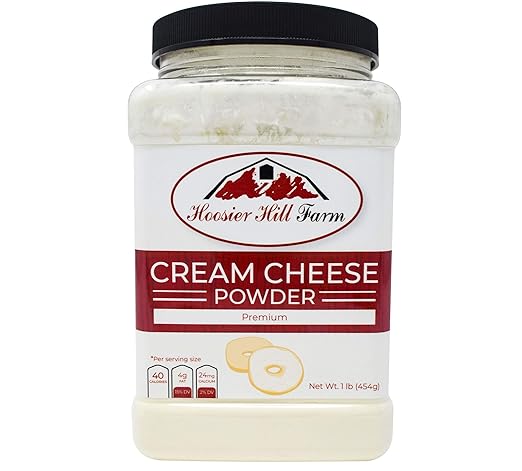
- Cream cheese powder, like this one from Hoosier Farms. On a scale of 1 to 10, with 1 being "somebody's trying to poison me" and 10 being "go away, I'm eating this cheesecake by myself", this product, mixed exactly according to directions on the package rates a solid 1. It was runny. I couldn't even ask my family to try it. It was so, so, so nasty.
- Cream cheese powder, the same from above, but mixed with homemade plain yogurt instead to thicken it up and maybe improve flavor and mouth feel. On the same scale of 1 to 10, this rated a 2. It was thicker but still had an off taste to it.
- One person on a preparedness forum indicated that she added one tablespoon of butter powder per cup of yogurt to make a cream cheese substitute very similar to Philadelphia cream cheese. I think she hasn't bought Philadelphia cream cheese or any brand of cream cheese in a very long time. It tastes ok, meriting perhaps a 4 or 5. Members of my preparedness class tonight thought it would work as a base for a chip dip, with the right herbs. It was definitely nothing like cream cheese.
- Cream cheese substitute from plain yogurt. Per numerous recommendations online, I drained and salted some of my homemade yogurt. I think I'd give this a 5 as well, better than the others, but nothing you'd want to eat a lot of.
- My fifth and final attempt at making cream cheese from food storage items involves the recipe below, the ingredients and instructions for which come exactly from Bigger, Bolder Baking. However, I did adapt the ingredients to using a whole milk substitute that is completely from food storage. Like the others, this did not turn out well, either. To be fair, I am using a whole milk substitute. Also, from what I have read from other sources, cream cheese is much easier to make and tastes better when the milk is not homogenized, and most store-bought milk is.
For me, right here and right now, I'm giving up. I think I will not pursue the quixotic quest for cream cheese any further. At least, for now. Maybe we should just get some goats.
Bigger, Bolder Baking's Homemade Cream Cheese
Ingredients
- 4 cups (32oz /1000ml) whole milk (full fat, not low fat) (1 1/3 cups p milk plus water to make full quart. 4 teaspoons honey, 1/4 cup butter powder
- 2-3 tablespoons lemon juice (lime juice or white vinegar)
- 1/4 - 1/2 teaspoon salt (read notes)
Instructions
-
In a heavy-bottomed saucepan, heat the milk on med-high. Stirring constantly until it starts to a rolling simmer.
-
Reduce the heat to medium. Add the lemon juice 1 tablespoon at a time, in 1-minute intervals. Continue stirring constantly.
-
Continue cooking until the mixture curdles. Stir constantly till the mixture has separated completely, this should take just a few minutes. There will be a green liquid on the bottom and thick curdles on top. Remove from the heat. This should happen within a few minutes.
-
Lay a sieve with cheesecloth over a large bowl. Pour the curd mixture into the sieve. Let it strain and cool for about 15 minutes.
-
Transfer curds to a food processor and process until curds have come together and are totally smooth and creamy. It will take around 3-4 minutes. Keep going if your cream cheese is grainy.
-
Add salt and taste. Add more if you want more flavor. Now is also a good time to add herbs, garlic or any other flavors you like.
-
This cream cheese must be stored in the fridge. I always use it within 7 days but can last as long as up to 2 weeks.
Links to related posts:
Making Thick and Creamy Yogurt
For further reading:
https://www.biggerbolderbaking.com/how-to-make-cream-cheese/
http://preparetodaywardnewsletter.blogspot.com/2014/09/my-food-storge-week-in-review-yogurt.html
© 2019, PrepSchoolDaily.blogspot.com
Subscribe to:
Posts (Atom)